
The essentials of base metals
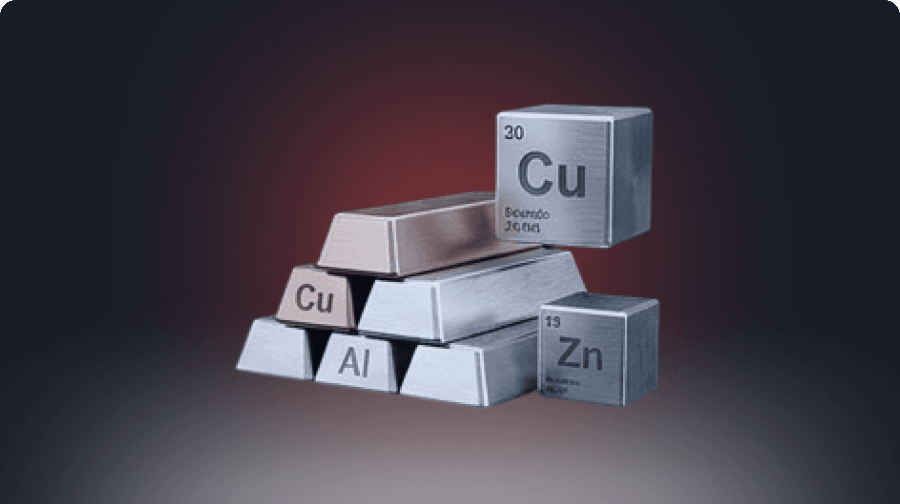
Base metals are crucial for industrial applications and economic development. They include commonly used materials such as copper, zinc, and nickel, which are...
Base metals are crucial for industrial applications and economic development. They include commonly used materials such as copper, zinc, and nickel, which are integral to construction, manufacturing, and other sectors.
Understand the critical role base metals play in the global economy.
Explore the various industries that depend on base metals for their operations.
What are base metals?
Base metals are typically defined as non-precious, industrially significant metals such as copper, zinc, nickel, aluminum, and lead. They are more abundant and cheaper than precious metals, making them essential for various construction and manufacturing processes. These metals are prone to oxidation and corrosion but are valued for their strength and utility.
A key base metal: Copper
Copper is one of the most important base metals, widely used across industries due to its excellent electrical and thermal conductivity. It plays a crucial role in applications such as electrical wiring, plumbing, and industrial infrastructure.
Its high conductivity and versatility make it essential not only in traditional sectors but also in modern technologies, including electric vehicles and renewable energy systems. Copper is a key component in improving energy efficiency and supporting the global transition toward more sustainable solutions.
Copper is often referred to as “Dr. Copper” because its price is seen as a predictor of global economic health.
Base metals in industrial applications
Due to their conductive properties, base metals such as copper are fundamental to modern infrastructure and technology, particularly in construction and electrical industries. Their wide range of applications makes them critical to sustaining and advancing our modern lifestyle, from building construction to powering electronic devices.
Forex and base metals
In the forex market, base metal prices are closely influenced by exchange rates, as these metals are traded globally. Fluctuations in the U.S. Dollar play a key role—when the USD strengthens, metal prices often decline, and vice versa.
Traders frequently monitor currency pairs such as AUDUSD and USDMXN, as they reflect the economic conditions of commodity-exporting and industrial economies. These currencies can provide valuable signals about demand for base metals and broader market trends, helping traders better understand price movements.
For example, a stronger Australian dollar often signals rising demand for commodities like copper and iron ore.
Conclusion
Base metals are more than just industrial commodities; they are the building blocks of modern society. Understanding the dynamics of base metals is essential for anyone involved in the commodities market, from investors to manufacturers. As the world continues to evolve, the demand for these fundamental elements will likely increase, underpinning their importance in global economic development and technological advancement.
Tags:
Commodities
Related articles

Macro Basics Economic indicators: Why do they matter for traders?
Economic indicators are essential tools that provide valuable insights into the state of an economy.

Macro Basics Federal Open Market Committee (FOMC): Introduction
Investors closely follow the decisions of the Federal Open Market Committee (FOMC), the policymaking body of the Federal Reserve System.

Macro Basics Trading times: Worldwide market
In the bustling world of finance, understanding trading times is crucial for investors aiming to navigate the global marketplace effectively.

Macro Basics Non-Farm Payrolls: NFP explained
Exploring the fundamentals of Non-Farm Payrolls (NFP), a crucial economic indicator that significantly impacts global financial markets by reflecting employment...

Macro Basics Understanding jobless claims
Jobless claims are a crucial economic indicator that tracks the number of people filing for unemployment benefits after losing their jobs.
Macro Basics What is a Producer Price Index?
The Producer Price Index (PPI) is a key economic indicator that tracks the average changes in selling prices received by domestic producers for their output over time.

Macro Basics Understanding personal income and outlays
Personal income and outlays are critical aspects of national economic performance. They encompass individuals’ earnings from wages, investments, and other sources, as...

Macro Basics U.S. GDP: A key indicator
Gross Domestic Product (GDP) is a key indicator of an economy’s performance. In the U.S., it reflects the total market value of goods and services produced...