
Commodities: Volatile or calculable market?
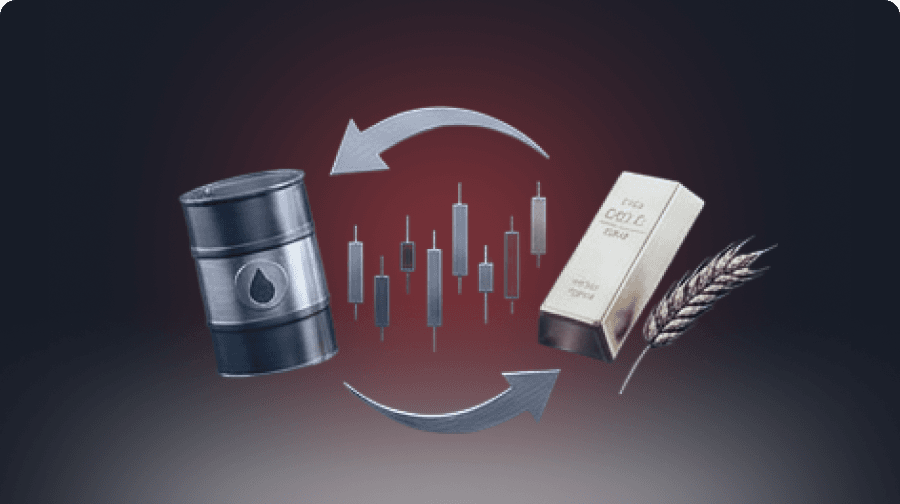
Commodities play a crucial role in global markets, providing raw materials that drive economic activities.
Commodities play a crucial role in global markets, providing raw materials that drive economic activities. Their trading is influenced by various factors, including geopolitics and climate.
Commodities are classified as hard and soft, each impacting markets differently. Commodities trading is linked to forex.
Nearly all commodities are priced in USD, creating an inverse relationship where a strong dollar generally reduces demand for USD-priced commodities.
Geopolitical tensions, climate conditions, and economic indicators significantly influence commodity prices.
Commodities: Definition
Commodities are raw materials or primary products that can be bought, sold, and traded across global markets. Their standardization ensures consistent quality, allowing them to be priced uniformly worldwide.
Commodities are typically divided into two main groups: hard commodities, such as oil and natural gas, and soft commodities, including agricultural products. We will explore these categories in more detail later.
These assets share some characteristics with precious metals like gold and silver. However, on the SimpleFX platform, commodities and metals are categorized separately to better match different trading preferences.
Due to their global importance, commodities are closely linked to the forex market. Most are priced in U.S. dollars, meaning that currency exchange rate fluctuations can directly affect commodity prices and trading conditions.
Types of commodities in trading
Commodities in trading encompass a diverse range of raw materials and primary products, each with distinct characteristics that shape their market behavior. This diversity adds complexity to commodity trading, demanding a strategic approach for each asset.
Energy resources
Natural resources include a broad spectrum of resources that power industries and homes worldwide. Fossil fuels like OIL and BRENT, along with natural gas, are central players in this sector, driving global economic activity. Energy commodities play an essential role in transportation, manufacturing, and electricity generation.
Agricultural
Agricultural resources constitute a significant category of traded commodities, encompassing products such as grains, sugar, and coffee. These agricultural goods are vital to the global food supply chain and are heavily influenced by the climate. Crops like cocoa are often traded on futures markets, where their prices reflect potential supply-demand changes and global consumption trends.
Green energy
While traders can’t directly invest in commodities like solar, wind, or hydropower, they can tap into the green energy market. How? By choosing clean energy equities. Companies like Tesla and First Solar offer investment options for those seeking exposure to this sector. These equities provide access to the growth potential of clean energy innovation, allowing traders to capitalize on the global shift toward environmentally friendly technologies.
The connection between commodities and USD
The U.S. Dollar (USD) is a fundamental anchor in the global commodities market. The dollar is the dominant reserve currency and the primary medium of pricing. Nearly all commodities, from crude oil to agricultural products like corn and cotton, are priced in USD, similarly to cryptocurrencies.
The relationship between commodities and the USD is essentially inverse. When the U.S. Dollar strengthens, commodities priced in USD become more expensive for non-U.S. buyers, potentially reducing demand and lowering commodity prices. This interplay makes commodity trading more challenging, as traders must carefully monitor currency fluctuations alongside supply-demand dynamics.
What factors impact fluctuations in the market?
The U.S. dollar is one of the key drivers of commodity prices, making forex market trends essential in market analysis. Since most commodities are priced in USD, a stronger dollar often puts pressure on prices, while a weaker dollar can support them.
Geopolitical factors also play a major role. Conflicts, sanctions, and political instability in resource-rich regions can disrupt supply chains and cause sharp price fluctuations. For example, tensions in oil-producing regions can affect production and exports, thereby influencing price differences between benchmarks such as Brent oil and WTI.
Climate conditions are especially important for agricultural commodities. Extreme weather events such as droughts, floods, and hurricanes can reduce crop yields, increasing volatility in products like soybeans, corn, and wheat. Long-term climate changes can further alter supply patterns and pricing trends.
Macroeconomic indicators provide additional signals. Reports such as Non-Farm Payrolls (NFP) influence market sentiment, but their impact can vary. Strong data may reduce expectations of interest rate cuts, which can pressure commodities, while in weaker economic conditions, positive data may signal recovery and support demand.
Broader market sentiment also matters. Indices like the S&P 500 can reflect overall investor confidence, indirectly influencing commodity markets through risk appetite and capital flows.
Commodities ETF: Why do they matter?
An exchange-traded fund (ETF) is a financial product that pools funds from multiple investors to invest in a diversified portfolio of assets. Commodities ETFs specifically focus on investments in commodities or linked assets, giving traders broad exposure to the market without requiring them to directly purchase futures contracts or the physical commodities themselves.
Commodities ETFs matter because they offer traders and investors a simplified way to gain exposure to the often volatile and complex market. They can track a specific commodity, such as gold, or a basket of various commodities, ranging from energy resources to agricultural goods. For example, an energy ETF might invest in energy equities like BP and Exxon, which are heavily involved in the oil sector.
In the world of cryptocurrencies and metals, ETFs provide a similar function. Gold ETFs have long been popular for allowing investors to gain exposure to gold prices without physically storing the metal. Meanwhile, new ETFs are emerging in the crypto space, enabling investment in digital assets like Bitcoin and Ethereum.
Tags:
Commodities
Related articles

Macro Basics Economic indicators: Why do they matter for traders?
Economic indicators are essential tools that provide valuable insights into the state of an economy.

Macro Basics Federal Open Market Committee (FOMC): Introduction
Investors closely follow the decisions of the Federal Open Market Committee (FOMC), the policymaking body of the Federal Reserve System.

Macro Basics Trading times: Worldwide market
In the bustling world of finance, understanding trading times is crucial for investors aiming to navigate the global marketplace effectively.

Macro Basics Non-Farm Payrolls: NFP explained
Exploring the fundamentals of Non-Farm Payrolls (NFP), a crucial economic indicator that significantly impacts global financial markets by reflecting employment...
Macro Basics Understanding jobless claims
Jobless claims are a crucial economic indicator that tracks the number of people filing for unemployment benefits after losing their jobs.
Macro Basics What is a Producer Price Index?
The Producer Price Index (PPI) is a key economic indicator that tracks the average changes in selling prices received by domestic producers for their output over time.

Macro Basics Understanding personal income and outlays
Personal income and outlays are critical aspects of national economic performance. They encompass individuals’ earnings from wages, investments, and other sources, as...

Macro Basics U.S. GDP: A key indicator
Gross Domestic Product (GDP) is a key indicator of an economy’s performance. In the U.S., it reflects the total market value of goods and services produced...